


Hi
Welcome (back) to The Prompt. What’s in this edition:
Small businesses are putting AI to work, with agentic use accelerating
100 million “How do I?” questions for ChatGPT every week
The OpenAI Academy is 2 years old, and it’s helping people build the skills and confidence to better use AI
[News] Small businesses, bigger capabilities
New OpenAI research shows how AI is helping small businesses access expertise, win customers, and accomplish more with the teams they already have.
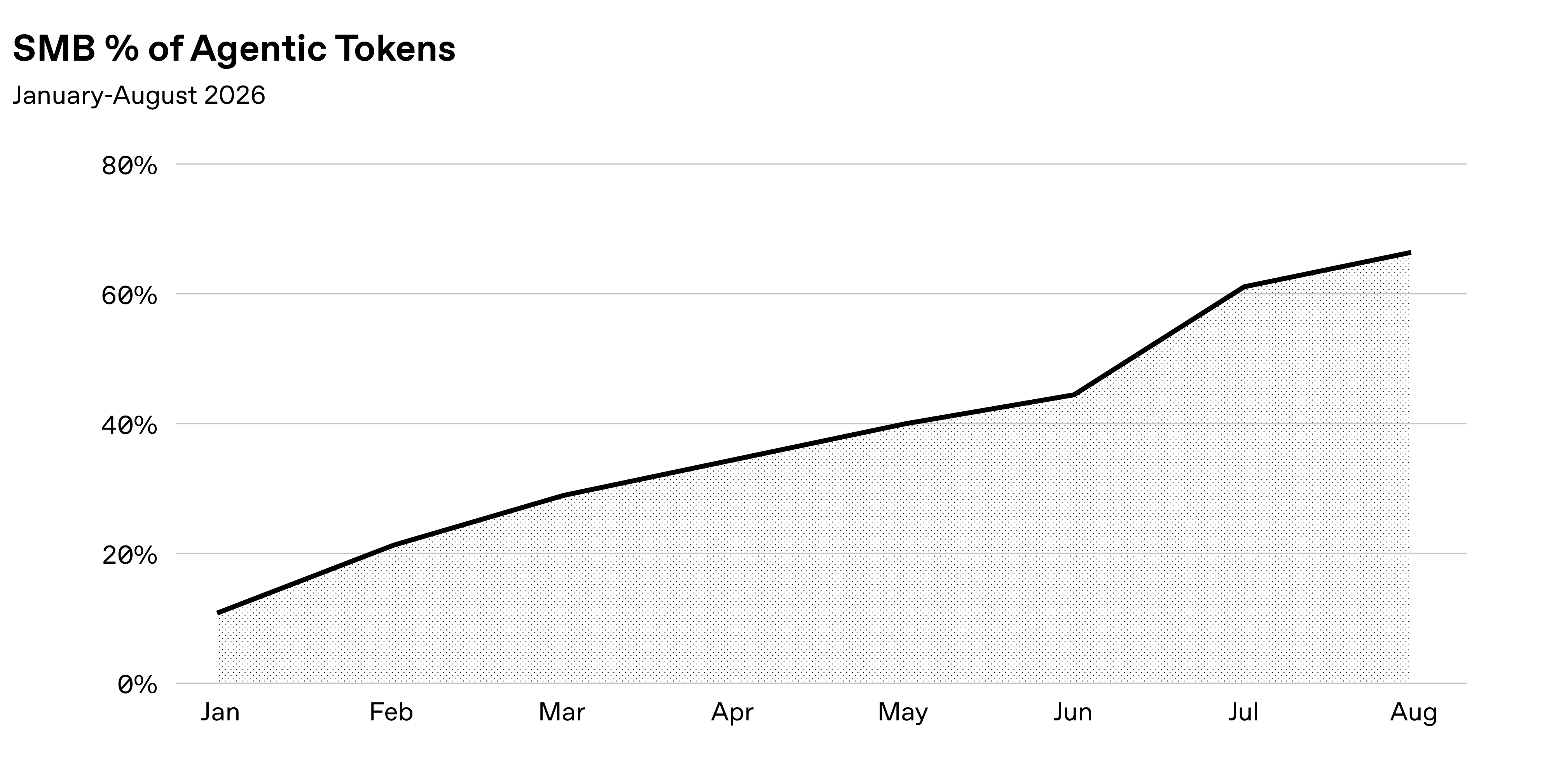
Some 4 million employees at small businesses worldwide used OpenAI tools during a single week in September, according to our new report. Nearly one in five worked at the smallest firms, those with fewer than 10 employees. And their use of AI is becoming more sophisticated. In August, agentic AI accounted for two-thirds of small-business output tokens, double its share in April.
Why does this matter? Because small businesses face a fundamental challenge: They need revenue to hire specialized talent, but often need that expertise to generate revenue in the first place.
The Federal Reserve’s 2025 Small Business Credit Survey illustrates the problem: 57% of small-employer firms reported difficulty reaching customers or growing sales, while 54% struggled to pay operating expenses.
AI offers a way to break that cycle, putting capabilities once reserved for larger companies within reach of smaller teams. The most compelling evidence comes from the business owners themselves.
In Chattanooga, Tennessee, real-estate software company Goliath Data used Codex to build and test a new property-search feature in roughly a day, at an estimated $40 in AI computing costs. Six days later, the company demonstrated the feature to a prospective customer who signed a $10,000-per-month contract.
In New Mexico, restaurant owners Ted and Tami Taylor used ChatGPT Work to analyze competitors’ menu prices, accounting for delivery markups, sandwich weights, and drink sizes. The research helped them avoid price increases that would have made some products uncompetitive.
And in Texas, entrepreneur Teri Moten used ChatGPT Work to research prospective school-district customers and prepare personalized outreach. Within 10 minutes, she had 48 contacts and tailored email drafts. Within 10 days, she had booked a paid training session.
Earlier this year, we explored how AI is lowering the barriers to starting a business. Now we’re seeing how it can help those businesses operate and grow. And today, we’re announcing our partnership with America’s SBDC, the national network of small business development centers serving 1 million entrepreneurs each year, to help even more small businesses use AI at work.

[Data] The power of ‘How do I?’
The same story playing out among small businesses is unfolding on a much larger scale: AI is putting new capabilities into people’s hands.
At the United Nations last week, Sam Altman put it this way: “The continuous story of human progress is not that tools replace human agency. It is that the right tools make people more capable.”
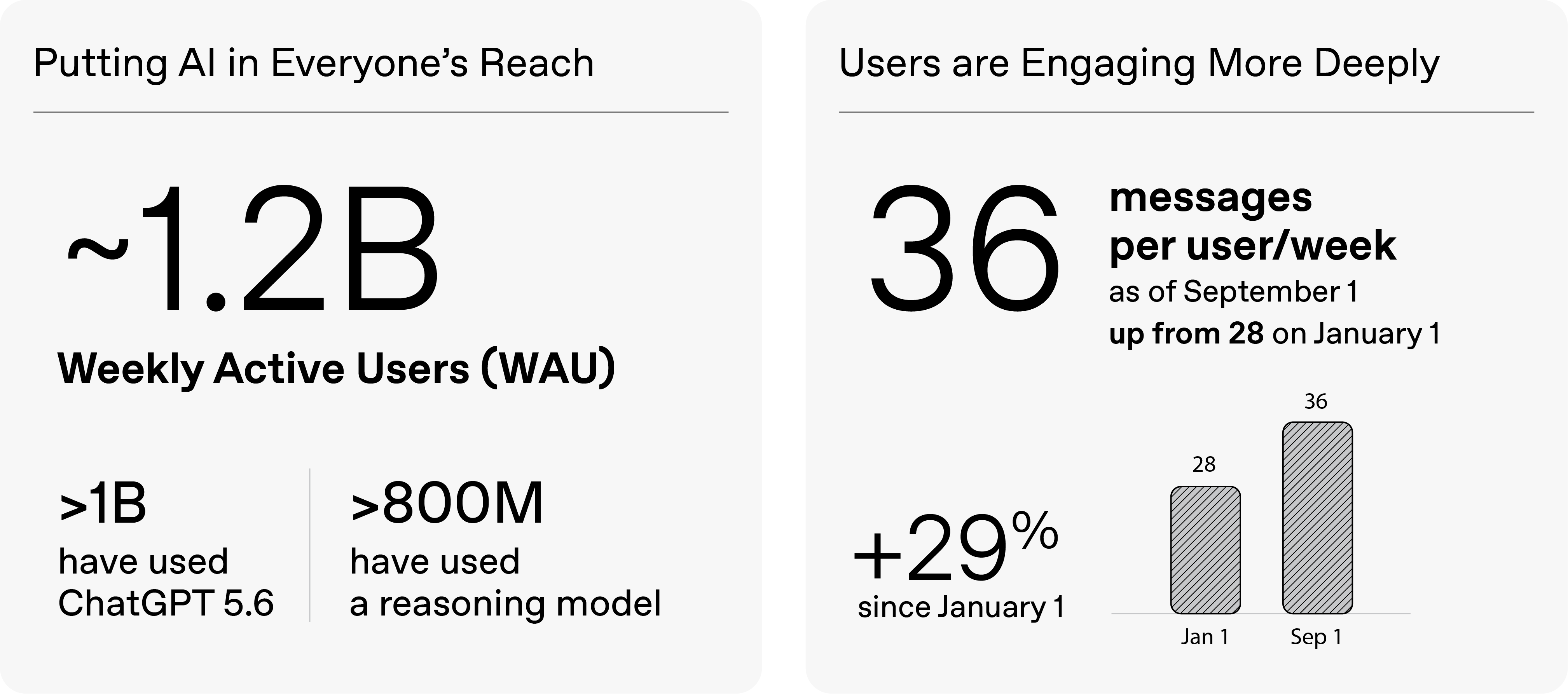
Consider the numbers. Roughly 1.2 billion people now use ChatGPT each week. More than 1 billion have used GPT-5.6, and more than 800 million have used a reasoning model. The average user now sends 36 messages a week, up from 28 at the beginning of the year.
But perhaps the most revealing number is 100 million.
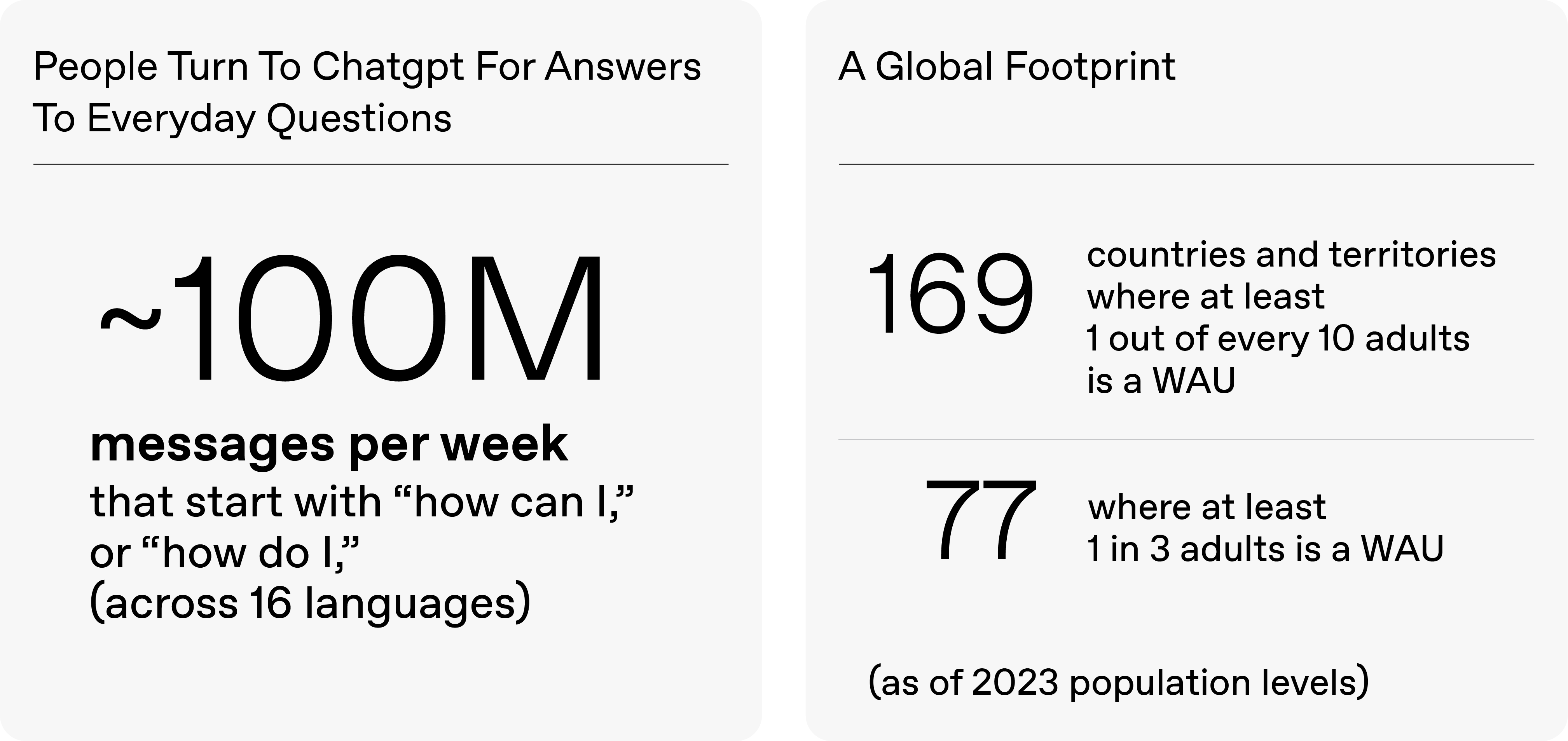
That’s approximately how many messages each week begin with some version of “How can I…?” or “How do I…?” across 16 languages.
How do I understand something? Fix something? Learn a new skill? Build something better?
And this opportunity is increasingly global. In 169 countries and territories, at least one in 10 adults now uses ChatGPT weekly. In 77, it’s at least one in three.
As debates about AI’s capabilities, safety, and economic impact continue, these numbers underscore another essential question: Who gets access to this technology, and what can they accomplish with it?
The measure of progress isn’t simply how capable AI becomes; it’s how much more capable people become with it.

[Academy] Two years of building AI skills
Making AI broadly available is only the first step. People also need the skills and confidence to put it to work.
That’s the idea behind OpenAI Academy, which turned two years old this month.
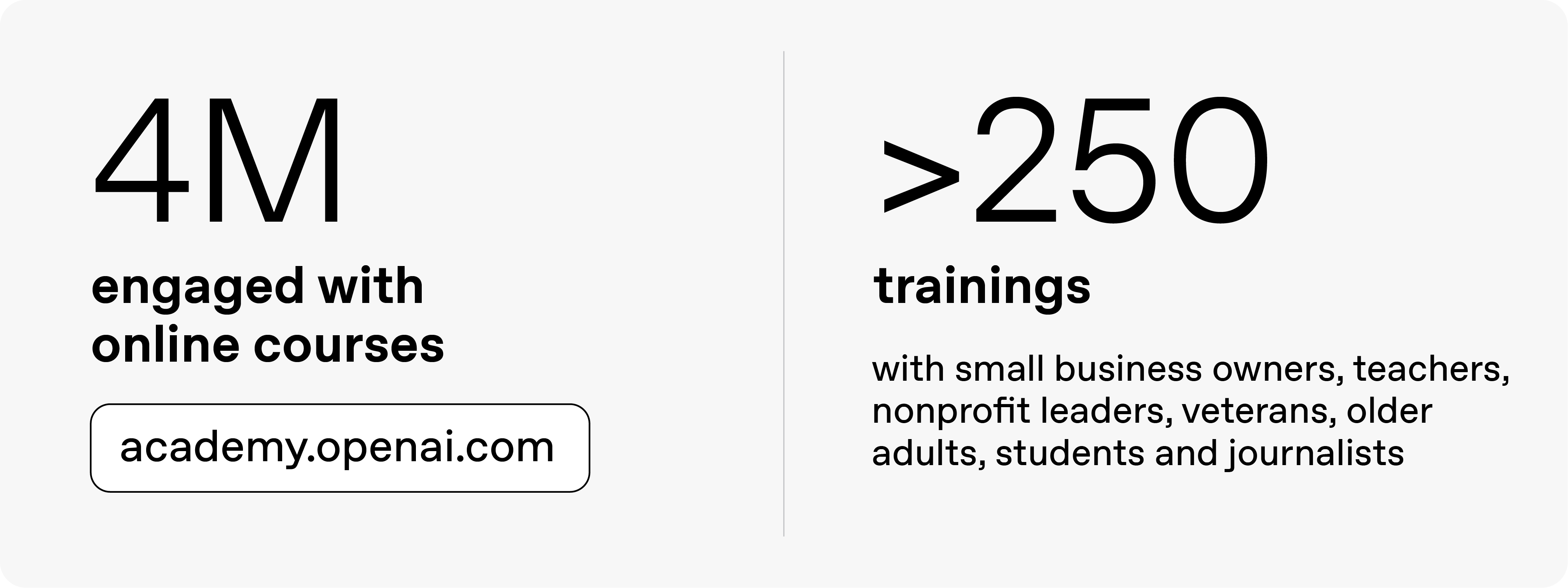
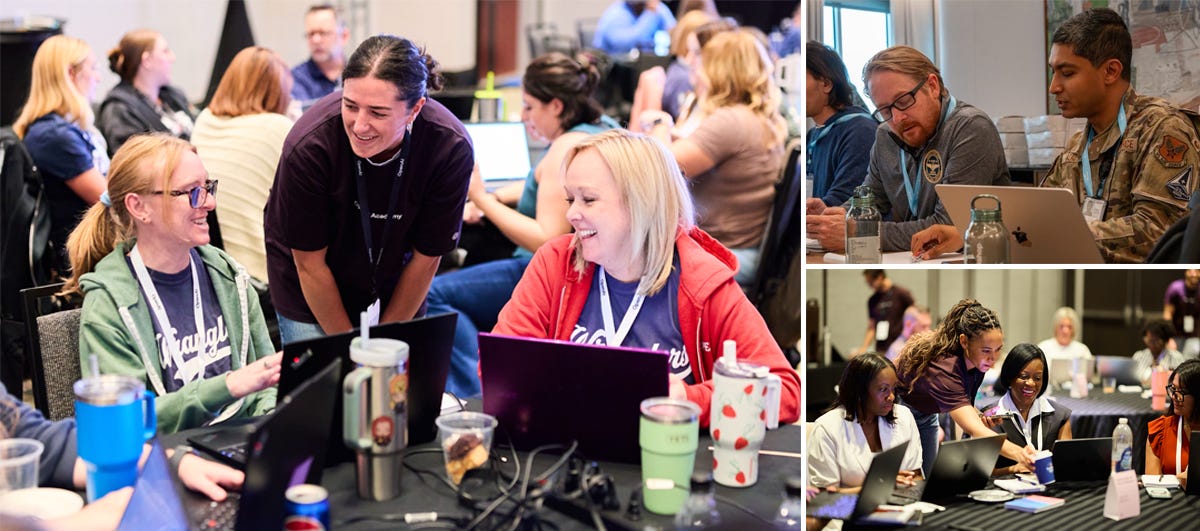
In two years, more than 4 million people have engaged with the Academy’s online courses, learning how to use AI in their work, education and everyday lives. The Academy has also held more than 250 trainings, reaching small-business owners, teachers, nonprofit leaders, veterans, older adults, students and journalists.
The audiences are deliberately broad because the opportunity is broad. A teacher learning how to create an interactive website to make a curriculum more engaging, a small-business owner scheduling competitive market research, an older adult learning how ChatGPT can help troubleshoot an IT problem at home — each is part of the same larger project: making sure the benefits of increasingly powerful technology aren’t confined to the people who already know how to use it.
That work has become more important as the technology itself has become more capable.
AI democratization isn’t just about putting a tool in someone’s hands; it’s about helping people know what to do with it.
And after two years, the Academy is helping millions of people take that next step.
[Disclosure]
Graphics created by Base Three using ChatGPT.
Such an honor having one of my use cases with ChatGPT Work featured!
How do you make small companies bigger while reducing corporate footprint is basically what AI does THANK YOU OPEN AI!!! 🇮🇱🇮🇱❤️🔥