


Hi
Welcome (back) to The Prompt. We typically use these Friday editions to recap developments from the week. Today, however, we want to share a few moments from a pretty special event. We’re always moved by the experience of getting out in the field and helping people use our tools, often for the first time. But Wednesday was really something else.
If this was forwarded to you and you find it interesting, make sure you’re signed up for the next issue.

[Weekly Wrap] Older Americans put AI to use
In 10 different locations across the country – from Queens to Fresno, and Miami to Minnetonka, Minnesota – 1,200 older adults gained hands-on experience Wednesday using ChatGPT.
Many were using it for the first time. They learned how AI can help with everyday tasks, like understanding a confusing bill, planning a trip, or communicating across languages. One participant in San Antonio said, “I left with the confidence to use this app safely.” In Queens, another planned to use ChatGPT for Cantonese-English translation when taking her mother to medical appointments.
Some were more regular users who use ChatGPT to help price their products, research family history, and upload medical reports and MRI scans to prepare for doctor appointments.
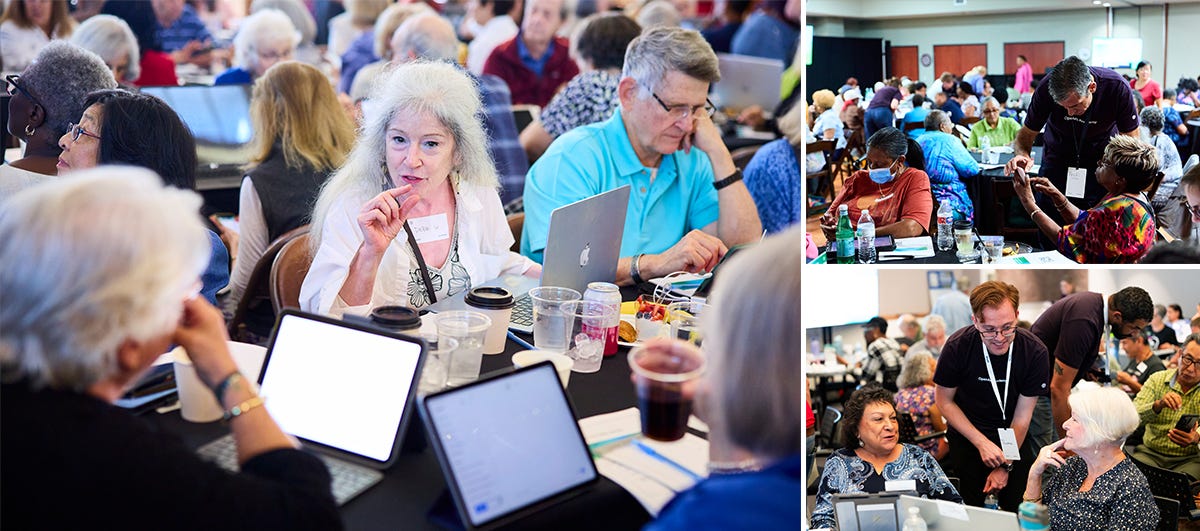
The Older Adults Jam also highlighted another increasingly important use of AI: helping people recognize scams before they fall for them. According to a new report we released this week, nearly 25 million people worldwide use ChatGPT each week to evaluate suspicious messages, emails, and websites.
Our work with Older Adults Technology Services from AARP teaches a simple rule – pause, think, and ask – and shows how ChatGPT can provide an additional layer of scrutiny when something doesn’t look right.
And if you missed out on Wednesday, don’t worry: we have free online tutorials for older adults, from asking your first question to spotting a suspicious message.
[Disclosure]
Graphics created by Base Three using ChatGPT.
The asymmetry in your Jam numbers is the whole story: 1,200 older adults got their first hands-on session while the offensive side now runs complete voice-cloned scams at roughly 75 cents per attack, so defensive adoption is racing industrialized fraud, not leading it. Pause-think-ask works because it inserts human friction, and the fraud economy is stripping friction from its own side faster than workshops can add it back. We traced the same shift from the infrastructure side, where AI, crypto rails, and adtech targeting converge into an exploitation pipeline aimed at cognitively vulnerable seniors: https://seldondance.substack.com/p/the-perfect-storm #ElderFraud #AISafety